
Surfer
Freemium
Track and improve how brands appear in Google and AI search engines, audit content for gaps, and optimize pages with live guidelines for marketing and SEO teams.
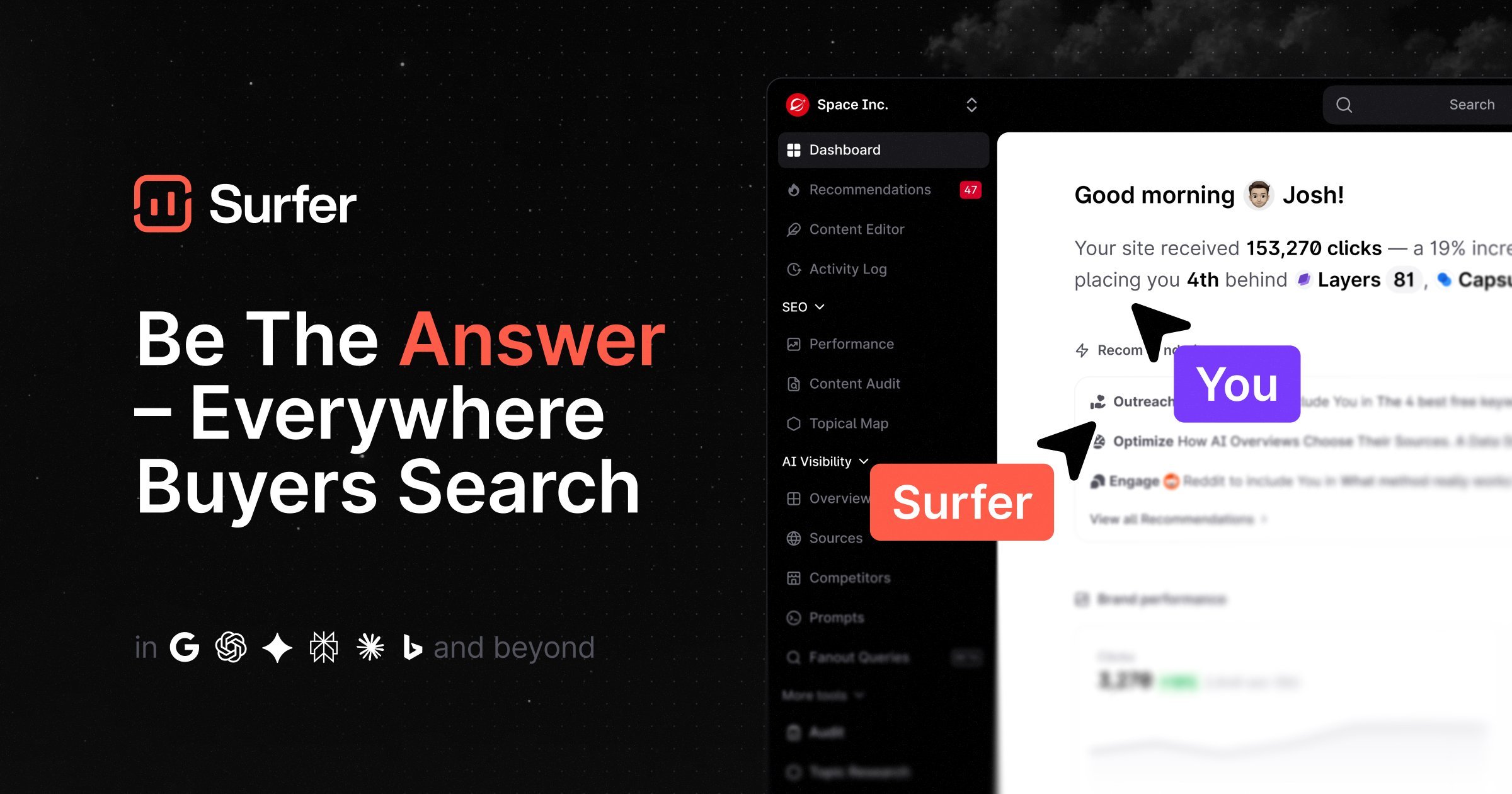
Surfer is an SEO platform that focuses on content optimization. It sits inside your writing workflow and tells you what to add, cut, or change based on what currently ranks.
About
Surfer is built for content production inside SEO workflows. It analyzes the top search results for your keyword, then gives you specific targets for word count, structure, and terms to include.
The core tool is the Content Editor. You write inside it or import from Google Docs, and it scores your draft in real time against competing pages.
It works in English and integrates with WordPress, Google Docs, and some other platforms. It does not replace keyword research tools or rank trackers. You use it after you know what you want to rank for.
Open it if you need to optimize pages at scale and you already have keyword targets. Skip it if you need full SEO research, AI detection you can trust, or cheap entry-level tooling.
Who Surfer is best for
It fits teams where content production is the bottleneck, not idea generation.
- Content-led SEO teams and SaaS marketers: The cluster-to-content workflow keeps research and drafting connected. You move faster from keyword group to published page.
- Teams that stall between keyword research and content production: Surfer connects clustering directly to brief creation. You stop losing time in handoffs.
- Content teams whose main job is producing and optimizing pages: The Content Editor gives writers guardrails without needing an SEO specialist to review every draft.
- Agencies managing multiple client content programs: You get repeatable briefs and a scoring system that clients can understand.
- Publishers producing several SEO articles per month: The audit tool surfaces existing content that needs updates, so you optimize old pages alongside new ones.
- Affiliate marketers competing in tough SERPs: The page-by-page guidance helps you match or exceed what currently ranks without guessing.
- Serious bloggers with revenue goals and content plans: You treat content as a system, not one-off posts.
- Teams wanting real-time guidance without separate optimizer tools: You do not need Clearscope or similar on top of this.
- English-language SEO specialists: The optimization data and NLP terms work best in English.
- Agencies with budget for premium tools: The price reflects team and volume features, not solo blogger pricing.
Best things about Surfer
These are the parts that keep you inside the tool instead of opening tabs elsewhere.
- The Content Editor with real-time scoring: You watch your score move as you write. It keeps you focused on coverage, not just word count.
- Direct Google Docs integration: Writers stay in familiar tools. You export when ready, or write inside Surfer and send to WordPress.
- Intent-based keyword clusters: Grouping includes suggested sub-keywords and content score benchmarks. You build supporting articles around pillars with clear direction.
- Content Audit connected to Search Console: It pulls your existing pages and shows specific gaps. You optimize what you have, not just publish more.
- Chrome extension for quick checks: You inspect any page without leaving your browser. Good for competitive spot-checks.
How you use Surfer
The path from keyword to optimized draft is short.
- Enter your target keyword and pick the competitor pages to benchmark against.
- Review the generated outline, word count target, and terms to include.
- Write or paste your draft into the Content Editor and watch the score update.
- Add missing terms, adjust structure, and push the score toward 70-80.
- Export to your CMS or Google Docs when the content score and readability align.
Why you should ignore it
Skip it when these limits match your situation.
- Price hikes and tight usage caps: Plans start around $79-99 monthly but rise fast with seats and AI credits. Article limits constrain high-volume operations.
- Generic optimization suggestions: Blindly following the score can produce bloated, keyword-stuffed content that mimics competitors without differentiating.
- No integrated rank tracking or client reporting: You still need other tools to show results to clients or diagnose why rankings changed.
- AI writer accuracy issues: It can suggest facts that are wrong, like restaurants in the wrong city. You must verify everything.
- Non-English limitations: Language mixing and weaker data outside English markets.